

There is a version of intimacy that now happens mostly in the dark, one thumbprint at a time: two people who have met once, or never, trading goodnight messages at one in the morning because that is the only hour that belongs to them. Twenty years ago that scene barely existed. Today it is so ordinary that calling it remarkable feels like describing running water – which is strange, because we still have no settled word for what it is. A relationship? A situationship? And if it is a “virtual relationship,” is that a step toward love or a substitute for it?
My read, after working through the recent polling and academic literature, is that the doomsayers and the techno-optimists are both describing the wrong thing. Virtual relationships are not hollow copies of real ones, and they are not a brave new frontier either. They are a renegotiation – of what counts as connection, of how much effort we owe the people we care about, and of where the digital ends and the physical begins. The question worth asking is not whether they are real. It is what they are for.
Start with a definition problem, because it is the source of most bad takes. “Virtual relationship” currently covers at least four very different things: a dating-app match that is supposed to graduate into a coffee date; a long-distance partnership held together by video calls; a friendship that only ever existed inside a game server; and a companionship with an AI that does not exist at all. Treating all four as one phenomenon is like lumping together a commute, a holiday and a spacewalk because all three involve movement.
The first two are virtual in method but physical in intent – the screen is scaffolding, and everyone involved knows it. The last two are virtual in fact. Keep that line in mind, because the evidence looks very different depending on which side of it you stand on.
What we mean when we say “virtual relationship”
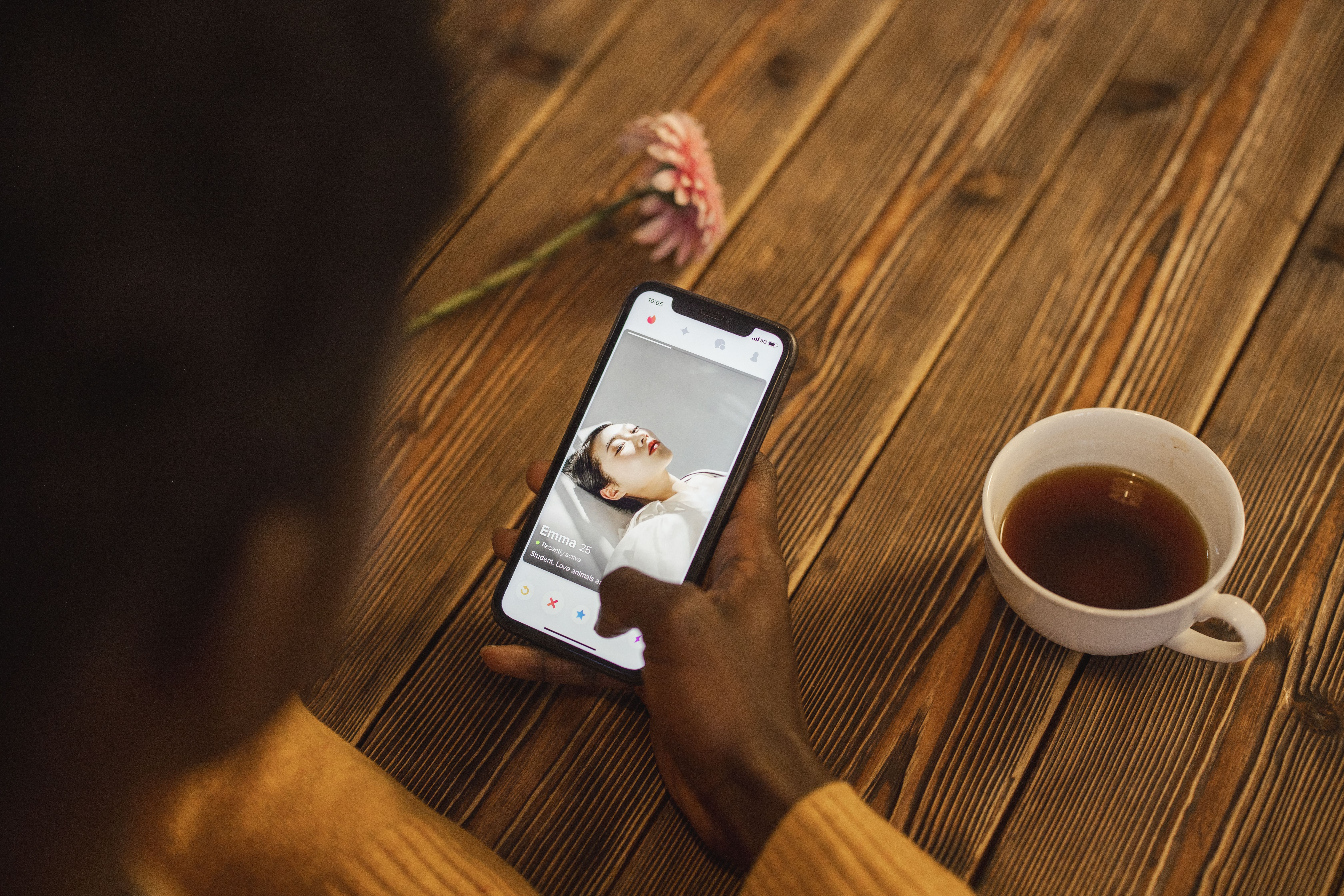
The numbers finally caught up with the headlines
On the romance side, the most useful recent snapshot is SSRS’s The Public and Online Dating 2026, fielded in January 2026 with a nationally representative sample of 2,012 American adults. Because it asks the same questions every year, the drift is visible:
| Measure (U.S. adults) | January 2024 | January 2026 |
|---|---|---|
| Have ever used an online dating site or app | 37% | 37% |
| Are currently using one | 7% | 6% |
| App users who have had a committed relationship with someone met online | 42% | 50% |
| Say app-started relationships are just as successful as in-person ones | 61% | 58% |
Read that table and one row does all the work: the share of app users who have been in a committed relationship with someone they met online jumped from 42% to 50% in two years, while the share of everyone who believes such relationships are just as successful as in-person ones actually dipped. More people are living the outcome while slightly fewer believe in it. Experience is running ahead of opinion.
That matches the longer trend. Pew Research Center’s 2023 analysis of online dating (data fielded in 2022) found about one in ten partnered adults first met their current partner on a dating site or app – and one in five among partnered adults under thirty.
In 2013 the comparable figure was 3%. Add the ambivalence the polls keep recording – 47% of users told SSRS in 2026 that online dating had been neither a positive nor a negative force in their love lives – and this does not look like a culture that gave up on love. It looks like a culture that moved the opening act online and is mostly fine with it.
Clumsiness is love itself
The quieter shift is that people who have already chosen each other now conduct a large share of the relationship through an interface, and that has changed what “effort” means.
A typed goodnight, a screenshot that reminded them of you, a voice note sent instead of a text: these are the new tokens of attention.
Relationship researchers now treat responsiveness – replying fully, promptly, warmly – as one of the strongest signals of intimacy, whatever the medium.
But the medium leaks. Text lets you edit before sending, curate the reply, present the best take – and some of what gets lost is precisely the evidence that someone is trying.
In a 2026 peer-reviewed study of long-distance couples, researchers found participants mostly resisted handing relationship tasks to AI assistants: a bot that drafts your apology or smooths over your argument, they felt, erases the visible effort that makes an apology worth anything.
One participant put it as well as any researcher has: “clumsiness is love itself.” The stumbles, the typos, the slightly-too-long silence are how you know a real person is on the other end.
(A sample of fourteen people means treat that as a map of an attitude, not a census of it. Still, it is the most honest sentence I have read about digital intimacy all year.)
The AI companion argument nobody is having
The long-distance couples resisting AI are pointing at a coming collision: if a bot offers constant availability, perfect memory and zero judgment, what happens to the humans who can only manage flawed, intermittent versions of those things?
The research is genuinely split. A 2026 review in Computers in Human Behavior Reports by researchers at VU Amsterdam concludes that well-designed “synthetic relationships” can relieve loneliness when they complement human bonds, but flags emotional over-reliance and distorted expectations of what a partner should be.
A separate 2026 paper in AI & Society by Jessica Szczuka and colleagues argues the “lonely loser who fell for a chatbot” narrative is largely moral panic – users are often making a deliberate choice to manage the risk of rejection, and the loneliness relief these tools offer is real but shallow, rarely surviving the moment the screen goes dark.
I land in an unfashionable middle. The honest test for any AI companion is not “is it real?” but “is it replacing something you could actually reach?” A tool that keeps an isolated person company while they rebuild a social life is a bridge.
A tool that makes the rebuilding unnecessary is a wall. The problem is that the apps themselves are indifferent to which one they are being, so the responsibility falls on the user – exactly where we are least equipped to exercise it.
The quiet majority isn’t romantic at all
It is worth remembering that most virtual connection has nothing to do with romance or artificial intelligence. A grandmother meeting a new grandchild over a laptop screen.
An immigrant calling home on a schedule that used to require a phone card and a landline. A night-shift worker whose whole social circle lives in a group chat.
Screens have quietly become the primary infrastructure of family and friendship for millions of people, and that version of the story carries none of the moral weight of the dating debate.
Even the romantic version is aging up. Pew’s 2023 analysis found that one in six Americans fifty and older has now tried online dating – a group that barely registers in the coverage, yet is adopting the tools at a faster clip than the pundits who write about them.
Where pixels point back to people
Then there is the corner of the market nobody writes the think piece about: paid connection.
The line between an AI girlfriend and a professional companion is thinner than the tech coverage admits – both industries run on the same fuel of loneliness plus disposable income, and scholars now study them together as an “outsourcing of affection” that predates the internet by millennia.
What has changed is the shelf. In Germany, where sex work has been legally regulated since 2002, the transaction has moved into the open: someone who wants an evening of uncomplicated human company can search for an escort München with the same matter-of-factness they would apply to finding a restaurant, weigh professional listings and book the night.
You can read that as progress or as the market pricing the last unpriced corner of intimacy.
I lean toward progress, with a caveat – clarity about what you are buying is precisely what stops a transaction from pretending to be love.
What it means for modern connection
Step back and the pattern is clear: intimacy has turned out to be a set of practices – attention, disclosure, reliability, effort – that survive almost any medium.
Voice notes and 1 a.m. texts carry them perfectly well. What the medium cannot do is decide what they are for.
The same screen is an on-ramp to a coffee date, a home for a family three time zones away, a stage for a fantasy, or a cage.
The distinction is ours to make, and making it deliberately – asking what each connection is for, and moving it toward a physical meeting when that is where it is headed – is, I think, the real skill of modern connection. The tools are neutral. The intention is not.